From Wanting to Help to Knowing How

From Wanting to Help to Knowing How

Synchronizing maternal needs with family support for a healthier healing journey.

Synchronizing maternal needs with family support for a healthier healing journey.

Team

UX Designer & Researcher (myself), 3 other UX Designers

Team

UX Designer & Researcher (myself), 3 other UX Designers

Tools Used
Figma

Tools Used
Figma

Timeline

4 Weeks

Timeline

4 Weeks

BYTE-SIZED INFO

tl;dr

BloomWell is an integrated maternal wellness ecosystem that combines wearable microneedle sensor technology with a collaborative mobile platform to monitor postpartum health and stress markers in real-time.


I primarily worked on the design of the shared mobile interface which translates physiological data (such as cortisol levels) into actionable "support nudges" for a mother’s partner and family.


This aimed at reducing the cognitive and communication burden on new mothers by enabling their support systems to provide proactive, data-informed care during the postpartum recovery period.

RESEARCH

Understanding The Context

New mothers navigate a complex and often isolating postpartum landscape characterized by invisible physiological stress and emotional fatigue.

Well-intentioned partners and family members often want to help but lack the real-time awareness or data to know when or how to intervene.

This forces the mother to take on the additional cognitive task of identifying her own needs and articulating them, which often leads to a breakdown in support and increased household tension.

USER INTERVIEW QUOTES

What the Mothers have to say...

"Something that could help fathers and other family members learn how to take care of the kid better, eg, if the kid is crying do this."

"Sometimes you wish they (the family) understood unsaid things."

"Motherhood comes with a lot of emotional challenges, especially guilt, like leaving the baby in a daycare or with someone."

PROBLEM FRAMING

How might we design a technological intervention for the support system (family, friends, etc.) of new mothers and help them create a safe environment for the mother to heal emotionally and physically?

INITIAL ITERATIONS

Experimentation with Wearable Tech

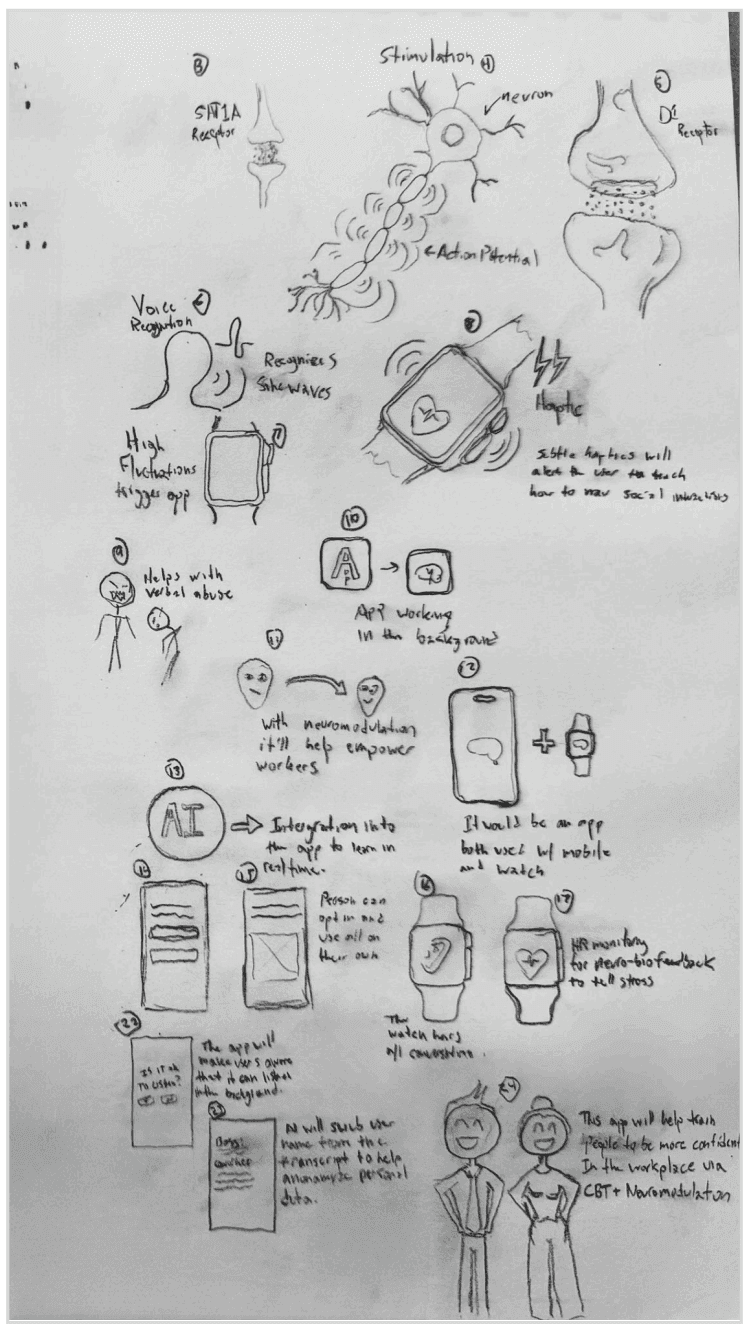
During ideation, we found a similarity among all our sketches and that was the use of wearable technology to detect stress. We decided to dive a little deeper into the kinds of wearable technology that measure cortisol levels and are safe to use by mothers.
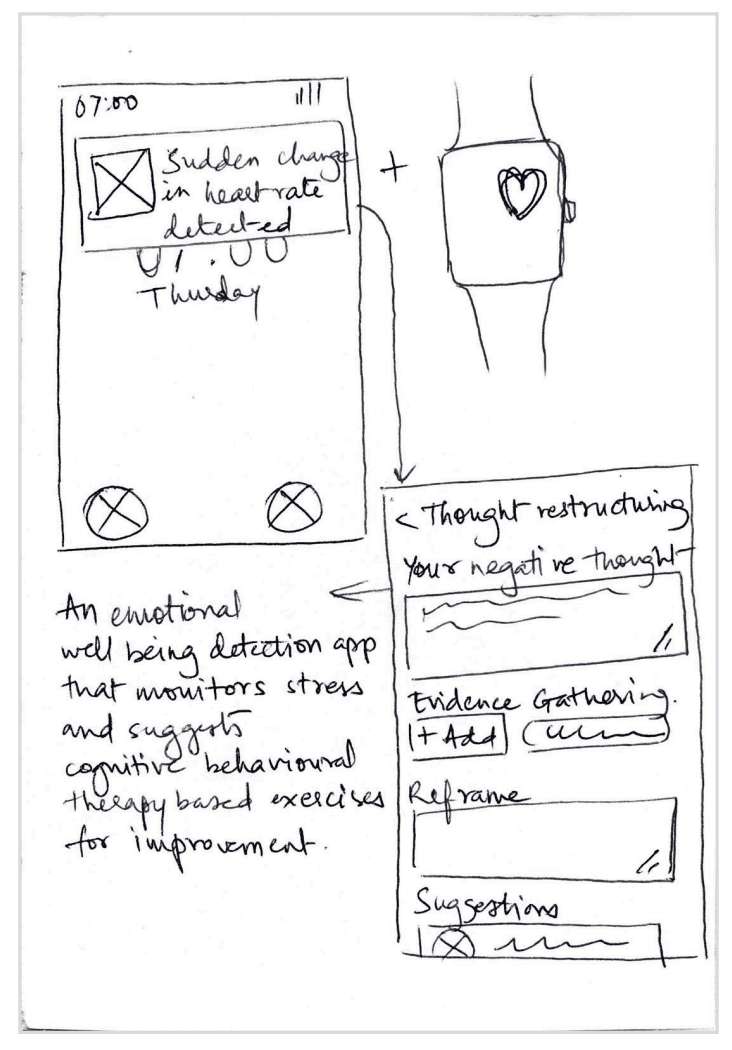
An emotional well-being detection app that monitors stress and suggests cognitive behavioral therapy based exercises for improvement.

An emotional well-being detection app that monitors stress and suggests cognitive behavioral therapy based exercises for improvement.

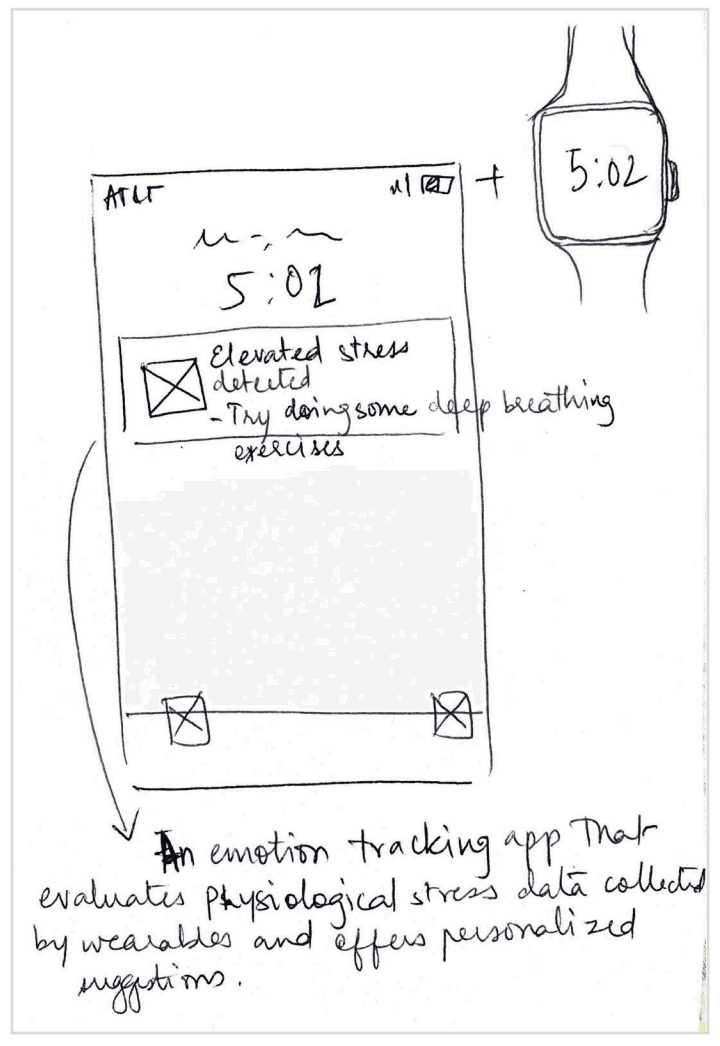
An emotion tracking app that evaluates psychological stress data and offers personalized suggestions.

An emotion tracking app that evaluates psychological stress data and offers personalized suggestions.

A wearable device paired with a phone to help a support system improve communication by utilizing cognitive behavioral therapy.

A wearable device paired with a phone to help a support system improve communication by utilizing cognitive behavioral therapy.

Note: Although we didn’t come across any existing technology that can monitor stress levels for the entirety of the duration of when the mother wears the device, we decided to build on a concept idea based on our secondary research and sketches.

Note: Although we didn’t come across any existing technology that can monitor stress levels for the entirety of the duration of when the mother wears the device, we decided to build on a concept idea based on our secondary research and sketches.

THE DESIGN

Breaking 'em down

#1 Onboarding

Herein, the mother would be able to add her details and fill in the support system contacts. Additionally, there is an option for the mother to control what data she wants to share with her support system.

#2 Monitoring Stress Levels

We would find a baseline for the mother's stress level using an aptamer-responsive microneedle patch. The patch will utilize hybridization chain reaction (HCR) amplification to detect cortisol via skin interstitial fluid.

#2 Baby Guide

We also included a baby guide to include the whole support system in the development of the child. This was tied to our mother’s interview insight which was ‘The support system wanted to help me but at times, did things that would in turn mess things up’.

POST DESIGN PHASE

Usability Testing

We tested our designs from both the stakeholder's viewpoints, that is, the mother as well as the support systems. This helped us realize some limitations and even some edge cases regarding our solution.

DRAG TO MOVE AROUND AND READ

On what basis are you tracking and deciding my support systems stress levels? What is normal for them and not normal for me?

On what basis are you tracking and deciding my support systems stress levels? What is normal for them and not normal for me?

It feels very calming to connect with other women going through the same situation through communities.

It feels very calming to connect with other women going through the same situation through communities.

It feels very calming to connect with other women going through the same situation through communities.

I really like the overall layout of the app. It makes me feel supported.

I really like the overall layout of the app. It makes me feel supported.

The knowledge hub should be primary because I feel the focus is not on me.

The knowledge hub should be primary because I feel the focus is not on me.

What if I want to post anonymously on the community forum? Someone else who is in my connection might see my posts or my comments.

What if I want to post anonymously on the community forum? Someone else who is in my connection might see my posts or my comments.

I like how it allows me the option of what kind of data I want to share.

I like how it allows me the option of what kind of data I want to share.

POST USABILITY TESTING

You Are Not Alone

Incorporating feedback

We realized that just showing the mother her stress levels was not enough; in some cases, it might make matters worse as she might not know what to do about it.


This prompted us to include an additional section (highlighted in the image) that would reassure her that what she is going through is not something that is specific to her.

SELF REFLECTION

My Learnings

Empathy before intervention.

Understanding how mothers navigate stress allowed us to frame physiological feedback as validation and permission to pause, rather than an alarm.


Design for shared understanding.

Making stress visible to trusted support systems created a shared language of care, reducing the burden of asking for help.


Build systems that last.

Designing for evolving motherhood needs and long-term sustainability ensured the product grows with the user, not just a single moment.

From collaborating on a cool project to discussing the next big thing happening in design, feel free to drop me a line.

Open to receive critique 🤍

© Copyright 2026 Manasi Ghutukade

From collaborating on a cool project to discussing the next big thing happening in design, feel free to drop me a line.

Open to receive critique 🤍

© Copyright 2026 Manasi Ghutukade

From collaborating on a cool project to discussing the next big thing happening in design, feel free to drop me a line.

Open to receive critique 🤍

© Copyright 2026 Manasi Ghutukade

From collaborating on a cool project to discussing the next big thing happening in design, feel free to drop me a line.

Open to receive critique 🤍

© Copyright 2026 Manasi Ghutukade

From collaborating on a cool project to discussing the next big thing happening in design, feel free to drop me a line.

Open to receive critique 🤍

© Copyright 2026 Manasi Ghutukade